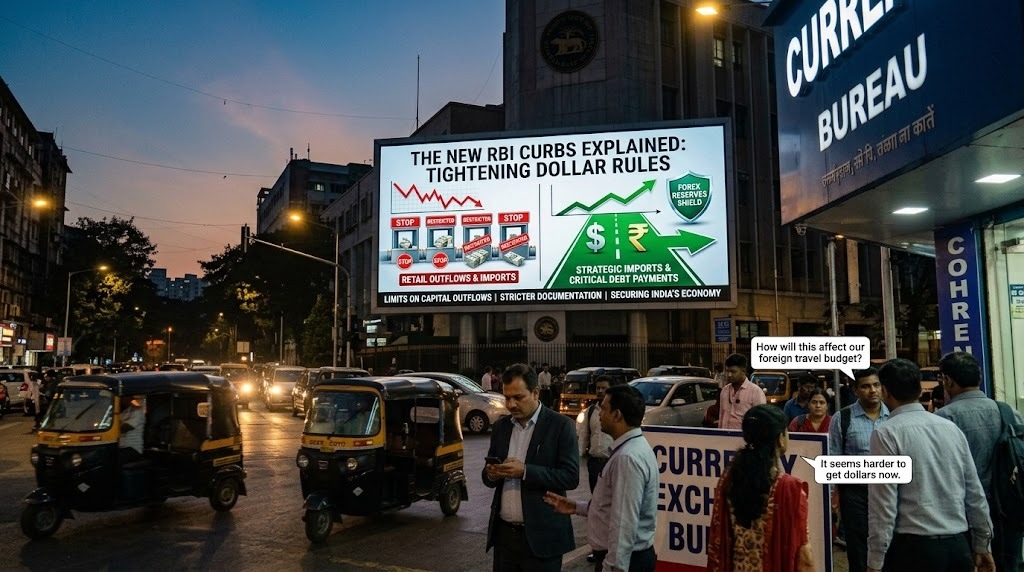
India Tightens Dollar Rules to Defend the Rupee: What the RBI's New Curbs Mean
India's central bank announced tougher measures on Saturday, October 10, to protect the rupee, which is trading close to its record low. The Reserve Bank of India (RBI) will supply dollars directly to three state-run oil companies from October 12, so their purchases stay out of the open market, and it has tightened the rules on currency hedging. Analysts say the steps should calm the market, but they are unlikely to remove the pressure on their own.

What the RBI Announced
A special dollar window for oil companies
India buys a large share of its crude oil from abroad, and oil is paid for in dollars. That makes oil companies some of the biggest buyers of dollars in the market. From October 12, the RBI will meet the full daily dollar needs of Indian Oil Corporation, Bharat Petroleum and Hindustan Petroleum through a special facility, supplying the dollars from its own reserves.
The idea is simple: if these three companies stop competing for dollars in the regular market, the rupee should face less selling pressure. The trade-off is that India's foreign exchange reserves will shrink as the RBI hands over the dollars.
Tighter rules on hedging and derivatives
Hedging means locking in an exchange rate in advance so a business is protected from sudden swings. Demand for this protection has surged as the rupee has weakened, and the RBI now wants to limit speculative use. The main changes are:
- Lower threshold: certain currency derivative deals above $5 million now need proof of a real underlying exposure, such as import payments. The earlier threshold was $100 million.
- 20% risk reserve: banks must keep a cash reserve with the RBI equal to 20% of the rupee value of eligible hedging contracts above $2 million, which makes these deals more expensive.
- No quick rebooking: contracts cancelled after the new rules cannot simply be booked again. Rollovers at maturity are still allowed.
- No double hedging: users must confirm that the same exposure has not been hedged through another bank.
Why the Rupee Is Under Pressure
The rupee has lost more than 7% against the dollar this year. Reports point to higher oil prices and rising global bond yields as the main drivers, along with importers who want far more dollars than exporters are supplying. On Friday it closed at Rs 96.73 per dollar, just short of its all-time low of Rs 96.96 from May. The RBI had already stepped in with market intervention and raised interest rates earlier this week, yet the pressure continued.
How the Market Reacted
After the announcement, the rupee gained about 0.6% against the dollar in the offshore non-deliverable forward market, although trading was thin. That is an early signal at best. Reserves tell a more cautious story: they fell by $12.95 billion to $734.60 billion in the week ended October 2, the fourth weekly drop in a row and roughly $51 billion below the September peak.
What Is Still Uncertain
- How many dollars the RBI will actually have to supply to the oil companies each day has not been disclosed.
- Whether the measures will hold the rupee steady depends on oil prices, foreign investment flows and the global dollar, none of which the RBI controls.
- An ANZ analyst quoted by Reuters says the steps should ease, but not eliminate, the pressure, and that the next week of reserve and rupee data will be a real test.
What It Means for Businesses and Everyday Readers
You do not need to trade currencies to feel a weak rupee. In general, a weaker rupee makes imported goods and dollar-priced services more expensive. Here is how that can show up.
Importers and small businesses
If you buy stock or materials from abroad, the new hedging rules may make protecting your costs more expensive and more paperwork-heavy. It is a good moment to review your cash flow plan, talk openly with suppliers through stronger vendor relationships, and check whether rising costs mean you should revisit how you price your services.
Anyone paying for dollar-priced tools
Many software tools and online services are billed in dollars. If your rupee cost for them rises, it may be time to audit subscription costs and cancel what you do not use.
Owners planning ahead
Currency swings are hard to predict. Having a financial cushion helps whatever the rupee does, which is why a business emergency fund is worth building before you need it.
Author's Review
In my view, this is a smart short-term move, but it is a patch and not a cure. Taking the oil companies' dollar demand out of the market removes the single biggest source of pressure, and the tighter hedging rules go after speculation. I like that the RBI is going after both sides of the problem.
What worries me is the cost. Paying for those dollars from reserves means the buffer keeps shrinking, and reserves have already fallen four weeks in a row. If oil prices stay high, the RBI cannot do this forever.
For small business owners, my advice is simple: do not wait for the rupee to settle. Check your import costs, review your dollar-priced subscriptions, and keep some cash in reserve. I will be watching reserves and oil prices over the coming week to see whether this plan really works.
Sources: Reuters reporting via CNBC and Business Recorder; Business Today.
Elena Rostova
B2B Operations Consultant & Business Editor
Elena Rostova is a B2B strategy consultant specializing in digital operations, regulatory risk management, and scaling business models. She writes on corporate licensing, operational frameworks, and enterprise growth.