AI Attack Ads Are Flooding the Midterms, and the Rules Are Behind
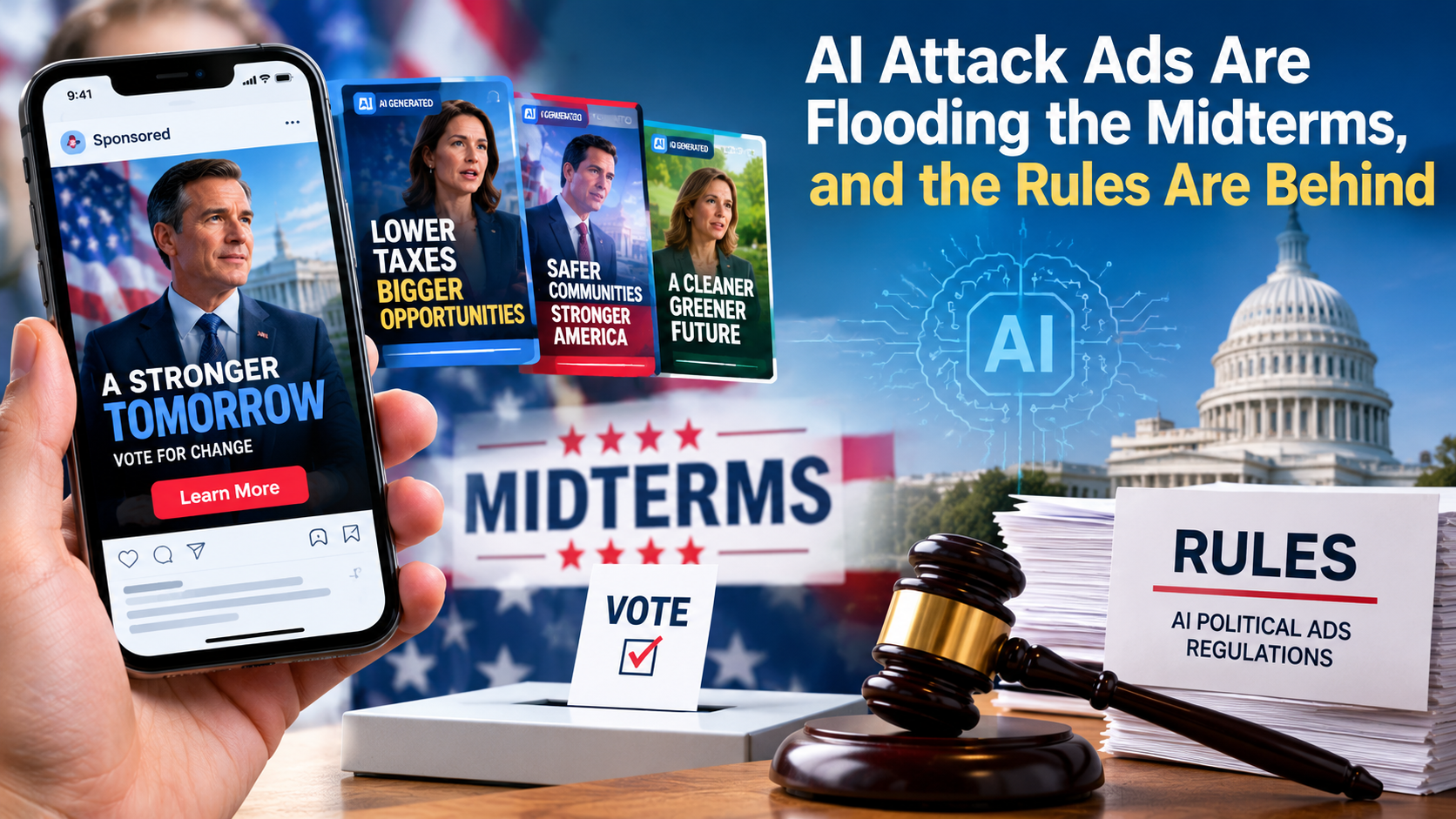
AI-generated attack ads are surging in the 2026 midterms, with $137 million spent on 220 such ads through Oct. 11, while U.S. election rules remain a patchwork.
Date: Monday, October 19, 2026 · Time: 9:46 PM (PKT)
AI-generated attack ads are surging in the 2026 midterms, with $137 million spent on 220 such ads through Oct. 11, while U.S. election rules remain a patchwork.
What Is Happening
Warnings about political deepfakes are no longer theoretical. The Wesleyan Media Project, which tracks campaign advertising, counted 220 AI-generated ads costing $137 million through Oct. 11, with most coming from Republicans, according to Axios reporting. Weeks earlier, AFP reported the group had tallied 164 such ads at just under $80 million, so the pace is climbing fast.
Examples Voters Are Seeing
Reports describe ads that show scenes that never happened or put invented words in opponents’ mouths. In Georgia, the Senate Leadership Fund, a super PAC aligned with Senate Republicans, ran deepfake ads targeting a Democratic senator, some without disclosing AI use. In New York, Republican Bruce Blakeman’s campaign released an AI spot billed as what an honest ad from Gov. Kathy Hochul would look like. In Pennsylvania, a Stacy Garrity ad featured an AI version of Gov. Josh Shapiro, and his spokesperson condemned it. Campaigns across parties have experimented with AI, and some creators frame satirical clips as the modern political cartoon.
Why Laws Are Falling Behind
No federal law specifically regulates AI-generated political ads. Four states prohibit certain deepfake uses, and 27 more require some form of disclosure. That leaves voters in different states with very different protections.
Detection is also hard. Researchers say it can be difficult to confirm whether AI was used, partly because federal rules do not require a disclaimer. Meanwhile, cheap AI tools cut production costs, which makes this tactic attractive to big and small campaigns alike.
The Bigger Risk: Doubting Everything
Cornell’s Sarah Kreps has argued the larger danger may not be people believing fake ads, but people starting to doubt everything they see. Experts also note that growing public distrust of AI could cause negative AI ads to backfire on whoever pays for them.
How to Check a Political Ad
- Read the “paid for by” line to see who sponsored it.
- Look for an AI label, but remember a missing label does not prove an ad is real.
- Check the claim on the candidate’s official channels and trusted fact-checkers.
- Watch for odd hands, text, lighting, or lip movement.
- Pause before sharing a shocking clip.
What It Means for Businesses and Professionals
The same cheap tools behind these ads are now part of everyday work, as we explained in our guide to AI tools in daily business operations. Fake content can target brands and individuals too, so building a trusted voice matters; see our tips on building a personal brand while employed full-time. For the bigger picture, read how AI and quantum computing are shaping the future.
Conclusion
AI attack ads are already here, growing quickly, and mostly governed by state rules. Until federal standards arrive, voters carry much of the burden: verify the sponsor, question dramatic clips, and share only what you can confirm.
Author’s Review
In my view, the real story is trust. I was struck that spending jumped so quickly in just weeks, and that rules differ so much by state. I do not think banning every AI ad is realistic, but clear labels should be standard. As a reader, I would rather verify twice than share once. That habit is our best defense right now.
Elena Rostova
B2B Operations Consultant & Business Editor
Elena Rostova is a B2B strategy consultant specializing in digital operations, regulatory risk management, and scaling business models. She writes on corporate licensing, operational frameworks, and enterprise growth.