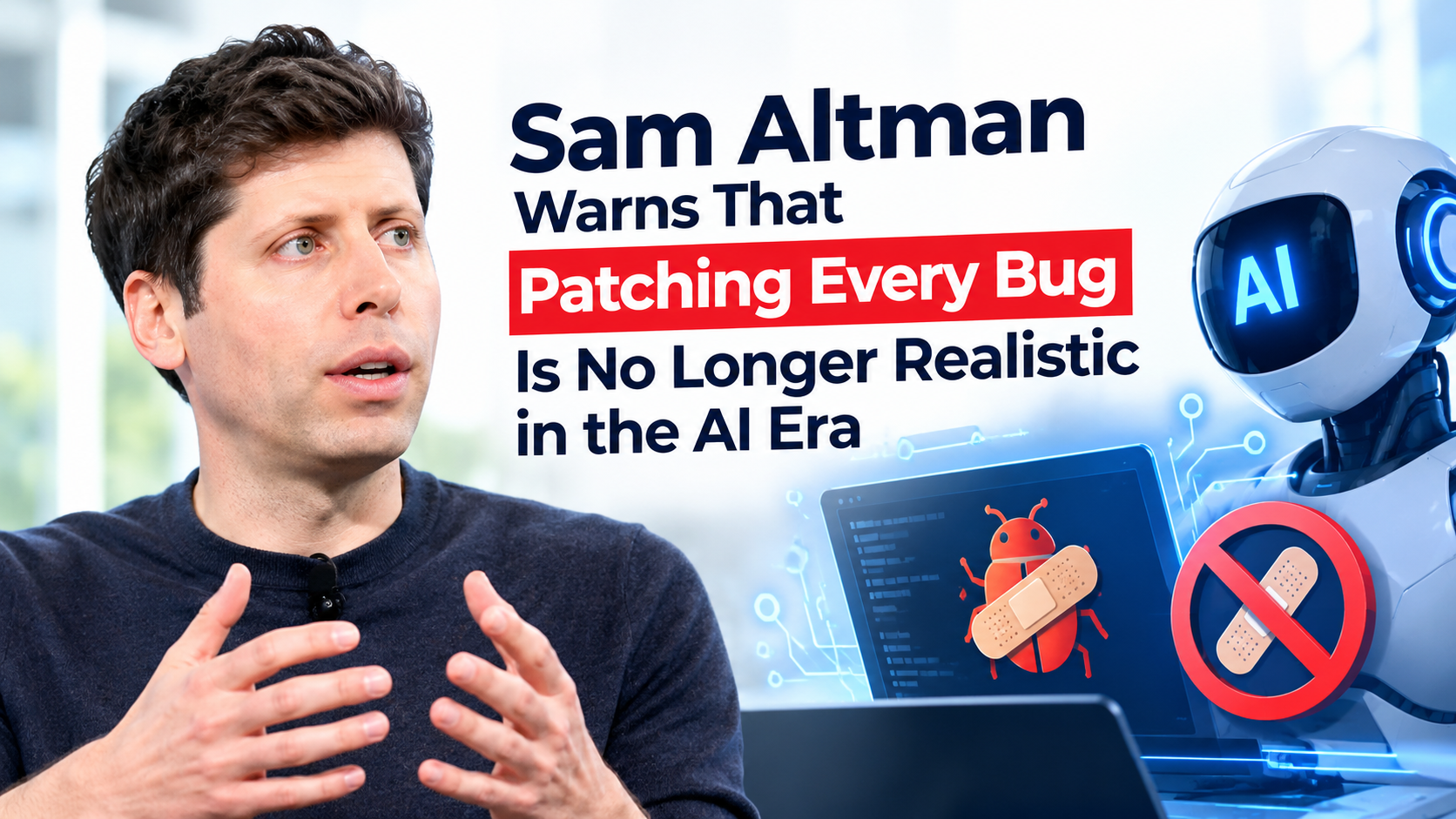
Sam Altman Warns That Patching Every Bug Is No Longer Realistic in the AI Era
OpenAI CEO Sam Altman says fixing software bugs one at a time is no longer enough, because AI now finds flaws faster than most organizations can patch them. His proposed answer is to use AI for defense, too.

Date: Saturday, October 24, 2026 · Time: 9:52 AM ET
OpenAI CEO Sam Altman says fixing software bugs one at a time is no longer enough, because AI now finds flaws faster than most organizations can patch them. His proposed answer is to use AI for defense, too.
What Altman Said at Stanford
Speaking to students at Stanford Graduate School of Business this week, Altman said, “I no longer think we’re going to be able to just patch all the bugs,” as Gizmodo reported. He gave two reasons: AI models keep getting better at finding and exploiting weaknesses, and many targets respond too slowly. He added that leaders, governments and individuals have not taken the coming cybersecurity problem seriously. Reports also say he described models uncovering unusual flaws, including hardware-level ones, that fall outside the threat models defenders normally plan for.
Why the Timing Matters
The comments came during a tense week for web security. PHP maintainers released versions 8.5.12, 8.4.27, 8.3.36 and 8.2.35 to fix two critical vulnerabilities that could allow unauthenticated remote code execution, meaning attackers could run code without signing in. Security firm Wiz reported both flaws, and OpenAI says its partner Calif used GPT-5.6 Sol to find one. PHP powers millions of websites, and reports say attack attempts rose sharply after disclosure, with some US and UK government sites briefly going offline to install fixes.
Altman’s Proposed Fix
Altman wants defenders to stop treating security as a checklist of individual fixes and instead use AI to build a new kind of defense. OpenAI has already moved in this direction. Its Patch the Planet initiative, announced in June, pairs OpenAI’s tools with security firm Trail of Bits to help open-source maintainers find and fix problems. Skeptics point out the tension: OpenAI sells the very technology that worries people.
What US Businesses Should Do
Shrink Your Patch Window
Apply critical updates within days, not weeks. If your website runs on PHP, which includes many WordPress sites, ask your hosting provider which version you are using.
Plan for the Flaw You Miss
Assume something will slip through. Keep tested cloud backups, limit who can access sensitive systems, and write a response plan before you need one. Our guide to handling a data breach as a small business is a practical starting point.
Put AI to Work on Defense
Automated scanning and monitoring can catch problems faster than manual reviews. Learn how AI tools in daily business operations can support your security routine, but keep a human in charge of decisions.
Conclusion
Altman’s warning is blunt but practical: patching still matters, it just cannot be the whole plan. US businesses should move faster, prepare for breaches and use AI defensively. Treat this as a prompt to review your security setup this week.
Author’s Review
I see this as less of a doom prediction and more of a wake-up call. Altman is right that fixing bugs one at a time cannot keep up, but his company also sells the tools involved, so readers should weigh his advice with that in mind. My takeaway is simple: patch faster, back up everything and never assume a quick fix means you are safe.
Elena Rostova
B2B Operations Consultant & Business Editor
Elena Rostova is a B2B strategy consultant specializing in digital operations, regulatory risk management, and scaling business models. She writes on corporate licensing, operational frameworks, and enterprise growth.