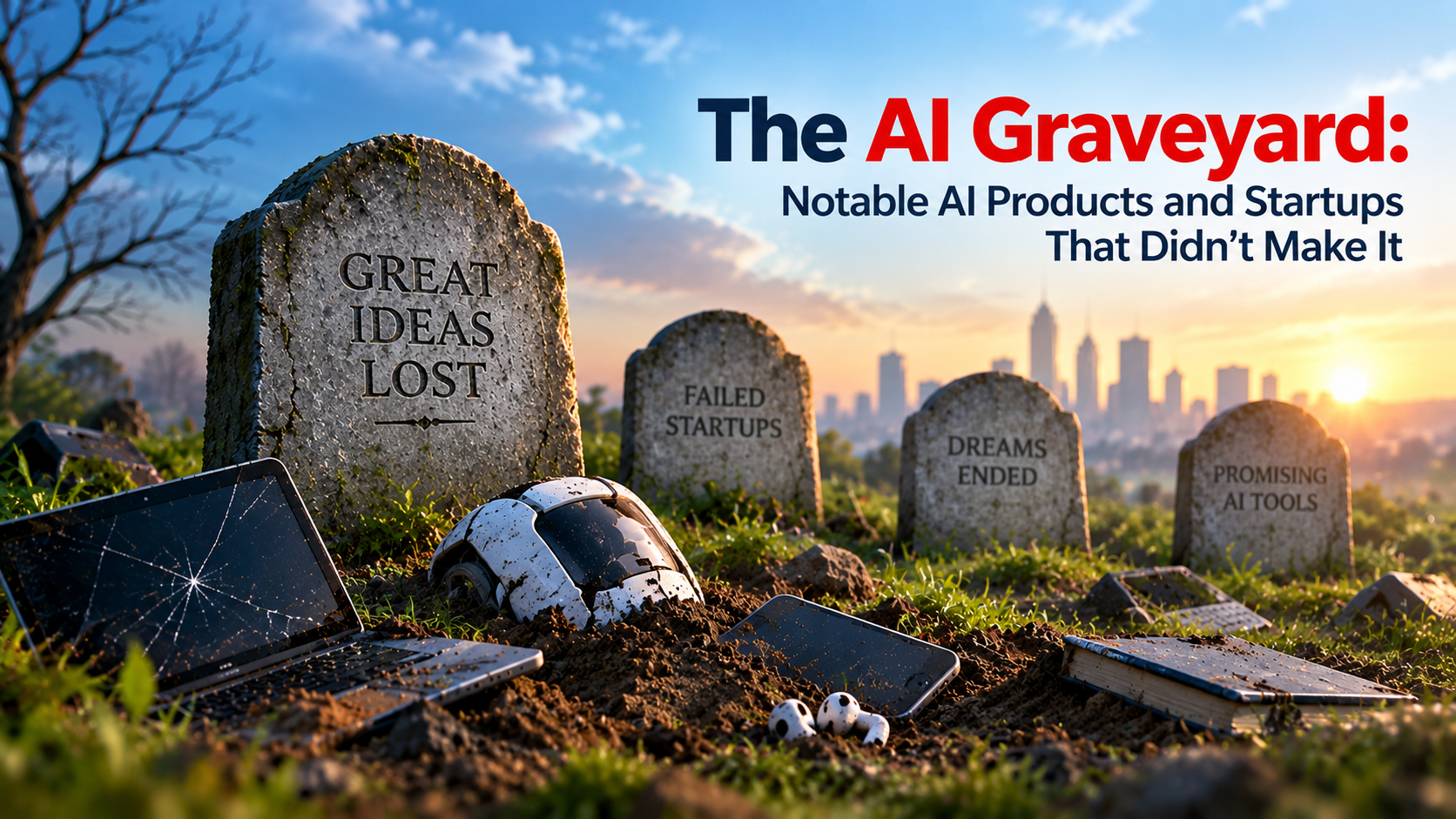
The AI Graveyard: Notable AI Products and Startups That Didn’t Make It
Character.ai’s bankruptcy and the shutdowns of Sora, Relay and Notion Mail show a pattern: big platforms absorb useful AI features, and high costs and legal risks sink many stand-alone products.

Date: Sunday, October 25, 2026 · Time: 4:09 PM PKT (7:09 AM ET)
Character.ai’s bankruptcy and the shutdowns of Sora, Relay and Notion Mail show a pattern: big platforms absorb useful AI features, and high costs and legal risks sink many stand-alone products.
For U.S. businesses and consumers, these failures matter. They show which AI tools are risky to build workflows around, and why a flashy launch is no guarantee of survival.
Why So Many AI Products Fail
Big Platforms Absorb the Features
Relay, a five-year-old workflow automation tool, shut down in August after OpenAI, Google and others built similar automation into their own products. Notion Mail, launched in April 2025, is closing because its users preferred separate AI agents for email. Huxe, an AI audio app, closed in May 2026 as larger platforms offered similar experiences.
Costs, Lawsuits and Weak Demand
Running AI models is expensive. Figgs AI, which reportedly had over 1 million users, shut down because keeping it free became unaffordable. According to S&P Global Market Intelligence, as cited by TechCrunch, about 42% of AI initiatives are eventually abandoned by their parent companies.
The Biggest Casualties
Character.ai
Founded in 2021, Character.ai raised $150 million at a $1 billion valuation in 2023. It filed for Chapter 11 bankruptcy on October 12, 2026, after lawsuits from families who said its chatbots harmed teens. Disney has offered $20 million for a license to some of its intellectual property, and the sale is expected to close by late November or early December. The app keeps running meanwhile, according to CBS News.
OpenAI’s Missteps
OpenAI’s July 9 “super app” redesign drew complaints of a cluttered interface and was reversed soon after. It also shut down the Sora video platform in March 2026 because of high costs and weak retention, and folded Operator into ChatGPT.
AI Gadgets
Humane raised $230 million for its AI Pin, then ended the product in February 2025 after performance problems and a battery-fire warning. HP bought most of its assets for $116 million. Rabbit’s R1 sold a reported 100,000 units early on, but the company is still updating it and has teased a new device called Project Cyberdeck.
Delayed, Not Dead: Siri and Recall
Apple’s AI-powered Siri, promised in 2024, only reached the iOS 27 beta this July. Apple also contributed to a $250 million settlement over how it marketed iPhone 16 AI features. Microsoft delayed Recall for nearly a year over privacy concerns, and a researcher has since built a tool that extracts data it captured.
What Businesses Can Learn
Treat any AI tool as replaceable. Keep your data exportable, avoid deep lock-in, and plan an exit before you commit. Our guide on the role of AI tools in daily business operations explains how to judge tools by real results, while the value of automating repetitive business tasks shows how to pick tasks worth automating. Before changing tools, weigh the hidden costs of switching business software platforms, because migration time, retraining and data transfers add up.
Conclusion
The AI graveyard is a reminder, not a verdict. Strong funding, big user numbers and early hype do not guarantee survival. Products that solve a specific problem better than the giants, at a sustainable cost, are the ones likely to last.
Author’s Review
In my view, this list is less about AI failing and more about weak business models failing. I find it telling that even OpenAI shut down products. My advice to readers: try new tools, but never let one startup hold your core operations hostage.
Elena Rostova
B2B Operations Consultant & Business Editor
Elena Rostova is a B2B strategy consultant specializing in digital operations, regulatory risk management, and scaling business models. She writes on corporate licensing, operational frameworks, and enterprise growth.