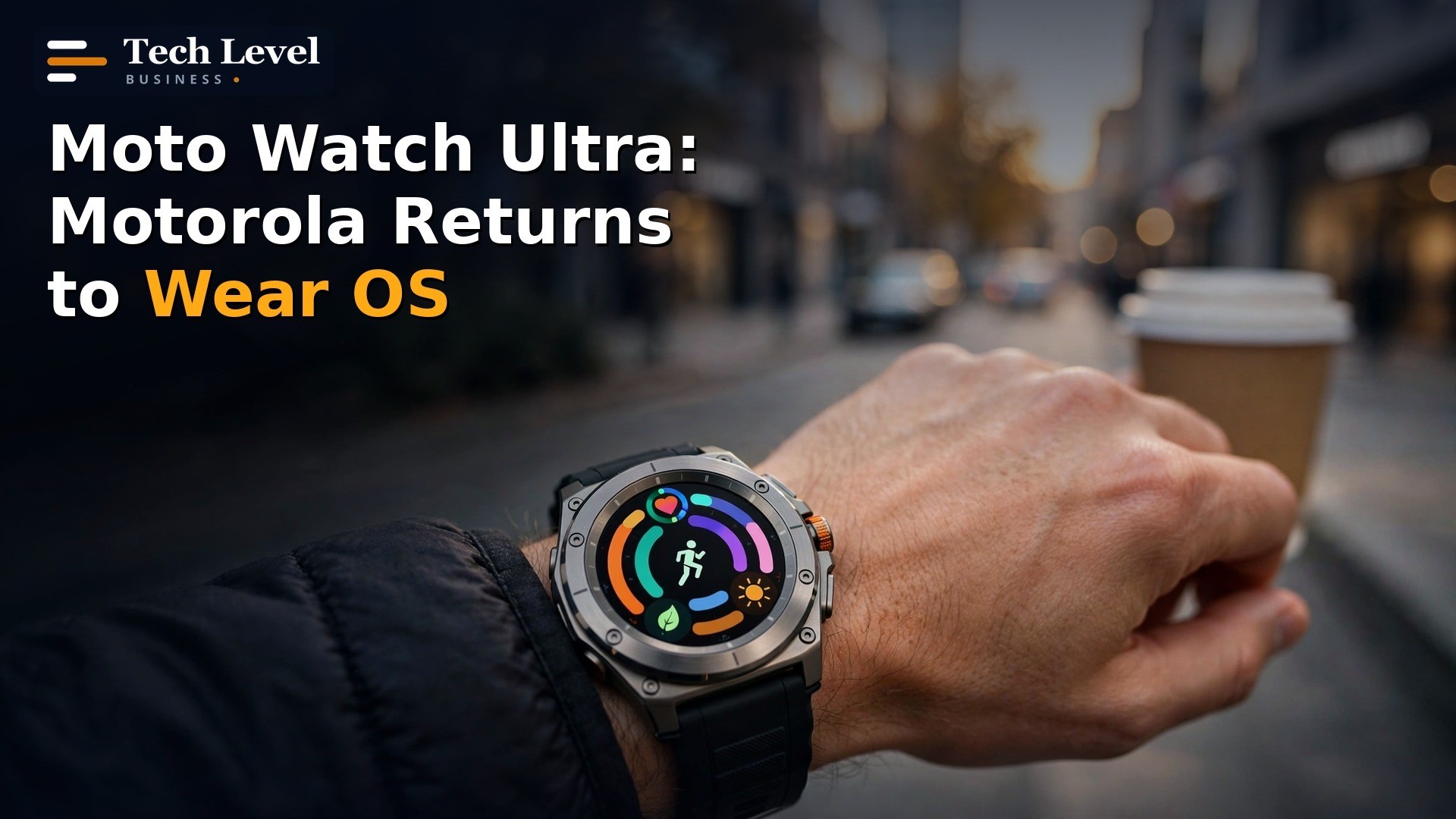
Moto Watch Ultra: Motorola Returns to Wear OS
Motorola is back on Wear OS with the Moto Watch Ultra — a $349.99 LTE smartwatch with Polar fitness tracking, a 1.5-inch OLED display, and up to 2 days of battery life.

Author’s Review
Honestly, this is the Motorola smartwatch many Android users have waited for. The price feels fair, the design looks premium, and LTE finally makes it useful without a phone. My only pause is battery life. Two days is workable, but it is a big drop from Motorola's lighter watches. If you want full Google apps and real fitness insight, this is a strong comeback.
Why This Launch Matters
Motorola helped define the early round smartwatch with the Moto 360 in 2014, then stepped away from full Wear OS. Announced at IFA 2026 in Berlin, the Ultra runs Wear OS 6, supports Google Play, and is Motorola's first Moto Watch with LTE eSIM. In the U.S., it went on sale September 10 on Motorola.com for $349.99, followed by Verizon on September 24, with T-Mobile, Metro by T-Mobile, AT&T, Xfinity Mobile, and Consumer Cellular to follow.
What You Get for $349.99
Design and Display
You get a 46mm stainless-steel case, a 1.5-inch OLED display with up to 2,700 nits brightness and always-on mode, and Gorilla Glass 3. It is rated IP68 and 5ATM. In the box are two bands — silicone and genuine leather — and it fits standard 22mm bands.
Health, Fitness, and AI
Polar makes the difference. You get Nightly Recharge for sleep and recovery, Sleep Plus Stages for light, deep, and REM sleep, Serene breathing with biofeedback, Smart Calories, and an on-wrist Running Coach. Wear OS 6 brings Google Wallet, Maps, Messages, YouTube Music, and Gemini. Motorola's Qira is also built in on compatible Motorola and Lenovo devices. That mix shows how AI assistants are changing daily work — a shift we explored in our look at AI tools in daily business operations.
The Trade-Off: Battery vs. Full Smartwatch Power
The watch uses Qualcomm's Snapdragon W5+ Gen 1 with 2GB of RAM and 32GB of storage. Its 550mAh battery is rated for up to 2 days of active use with always-on display off, and a 15-minute charge is rated for up to 24 hours. That is the cost of going full Wear OS. Motorola's lighter Moto Watch lasted up to 13 days, but it could not do this much. Motorola also promises two major OS upgrades. See the full launch breakdown in TechRepublic's launch guide.
Who Should Buy It in the U.S.?
Buy it if you want an Android watch that can call, text, pay, navigate, and track training without your phone. It suits Motorola phone users and Polar-style recovery fans. Skip it if you need multi-day hiking battery or want ECG. A hands-on YouTube breakdown of the IFA 2026 launch confirms the same core specs — 1.5-inch OLED, Snapdragon W5+ Gen 1, LTE eSIM, dual-band GPS, and up to 2 days of battery — so early impressions line up with Motorola's claims.
Conclusion
The Moto Watch Ultra is not the most extreme watch. It is the most complete Motorola watch yet — at a price well below many premium rivals. For U.S. Android users, that balance of Wear OS, LTE, Polar health, and $349.99 pricing makes it worth a serious look. It also fits the wider shift toward AI-powered devices we track in our story on innovations driving the future.
Frequently Asked Questions
Is the Moto Watch Ultra compatible with iPhone?
It is built for Android and Wear OS. iPhone users will get a limited experience and should consider an Apple Watch instead.
Does it work without a phone?
Yes, with an eligible LTE plan. You can make calls, send texts, get notifications, and use Maps and Wallet without your phone nearby.
How long will it get software updates?
Motorola says it will receive two major OS upgrades, starting from Wear OS 6.
Elena Rostova
B2B Operations Consultant & Business Editor
Elena Rostova is a B2B strategy consultant specializing in digital operations, regulatory risk management, and scaling business models. She writes on corporate licensing, operational frameworks, and enterprise growth.