Huawei Unveils Sense G1, Its First Continuous Glucose Monitor
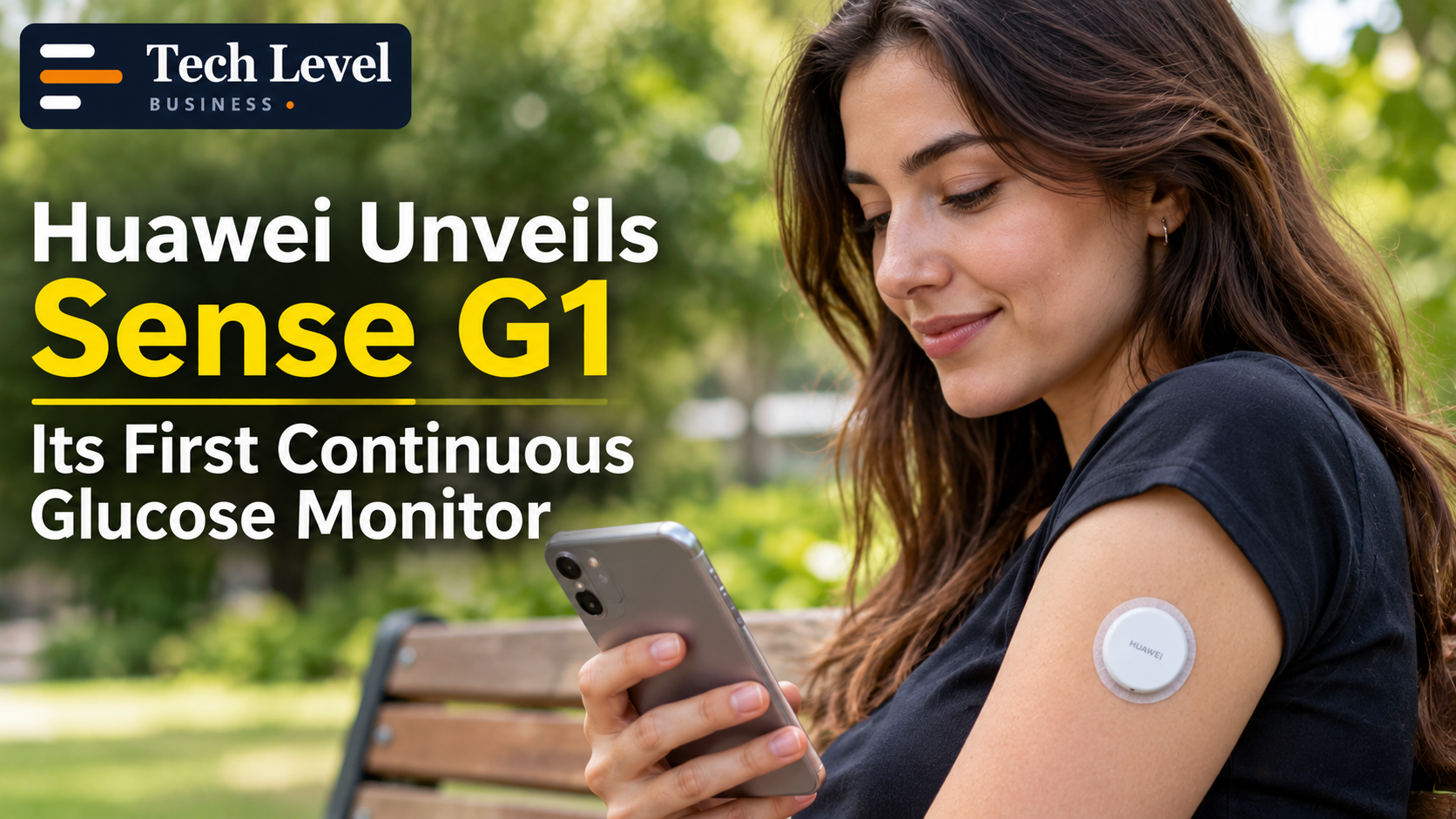
Huawei has announced the Sense G1, its first continuous glucose monitor (CGM), in China. The small arm-worn sensor carries China’s highest medical-device approval class, is registered for up to 16 days of wear, and sends readings to phones, Huawei watches and fitness bands. Huawei has not shared pricing or availability, and there is no sign of a U.S. launch yet.

Author’s Review
Most “blood sugar smartwatch” stories overpromise. This one feels different because Huawei built a real sensor and cleared the regulatory hurdle first. I like that approach. Still, several headline numbers come from leaks rather than from Huawei, so I’d treat them carefully. For American readers, this is a development to watch, not a device to go looking for.
What Huawei Announced
Huawei revealed the Sense G1 on November 13, 2026, through a post on Weibo, according to Android Authority. The sensor is a small, round patch, roughly the size of a U.S. quarter, worn on the upper arm. It is built for a single user and needs no calibration. Readings go to a phone, a compatible Huawei smartwatch or a fitness band, and the system alerts the wearer to unusual highs or lows.
Registration details cited by several outlets say each sensor lasts up to 16 days, though a couple of European sites reported 14. Huawei executive Bruce Lee said he first wore the sensor in December 2023, and reports describe a development effort of more than three years.
Why Class III Approval Matters
China’s National Medical Products Administration reportedly approved the system on October 30 as a Class III device. That is the country’s highest medical-device risk category, shared with products such as cardiac stents and artificial joints. It is also the first Class III device from Huawei’s consumer hardware business, so it faced stricter review than a typical wellness gadget. Regulatory documents reportedly describe it as intended for adults with diabetes.
Specs That Are Not Yet Confirmed
Leaks cited by Chinese outlet IT Home suggest a mean absolute relative difference (MARD) below 10% and a data delay of 5 to 15 minutes. MARD shows how closely readings match laboratory references, and lower is better. These figures are leaks, so treat them as unconfirmed until Huawei or independent testing backs them up. The sensor is also reported to use a thin filament under the skin, as other CGMs do, so it is not a needle-free device.
How It Differs From Smartwatch Glucose Features
Huawei’s current watches can flag a higher risk of blood sugar problems in supported markets, but they do not produce an actual glucose reading, according to TechRepublic. The Sense G1 is a dedicated sensor instead. Like other CGMs, it measures glucose in the fluid around cells, not directly in blood, which is why readings trail slightly behind. StarFish Medical engineers put that lag at about 5 to 10 minutes in this explainer video.
What It Means for U.S. Readers
Huawei has not announced availability outside China, and coverage so far cites only China’s approval. In the United States, the FDA has said it has not authorized any smartwatch or smart ring that measures or estimates blood glucose on its own. Its February 2024 safety communication separates those products from watch apps that display data from FDA-authorized sensors that pierce the skin.
People with diabetes should talk with their health care provider about FDA-authorized options, such as the Dexcom G7, which can pair with wearables like the Apple Watch, and avoid any device promising needle-free glucose readings. For more on the shifts behind stories like this, see our look at the innovations driving the future.
Frequently Asked Questions
1. Is the Huawei Sense G1 available in the United States?
No. Huawei has revealed it in China and has not shared pricing or availability, so a U.S. release is unconfirmed.
2. Does the Sense G1 measure blood sugar without a needle?
Reports indicate it does not. It is described as using a thin filament under the skin, like other CGMs. The FDA warns against smartwatches and rings that claim needle-free glucose measurement.
3. How accurate is the Sense G1?
Leaks point to a MARD below 10% and a 5 to 15 minute data delay, but those figures remain unconfirmed pending independent testing.
Conclusion
The Sense G1 shows wearable makers moving from wellness estimates toward regulated medical hardware. For now, it is a China story with open questions on price, availability and independent accuracy. U.S. readers should watch for updates and follow FDA-authorized guidance for glucose monitoring. This article is for information only and is not medical advice.
Alex Vance
Senior Tech Analyst & Systems Architect
Alex Vance is a Systems Architect and Senior Tech Analyst with over 8 years of experience evaluating cloud infrastructure, AI integration, and enterprise software models. He focuses on practical, scalable technology deployment for modern businesses.