SpaceX Catches Starship Upper Stage After Orbit in Spaceflight First
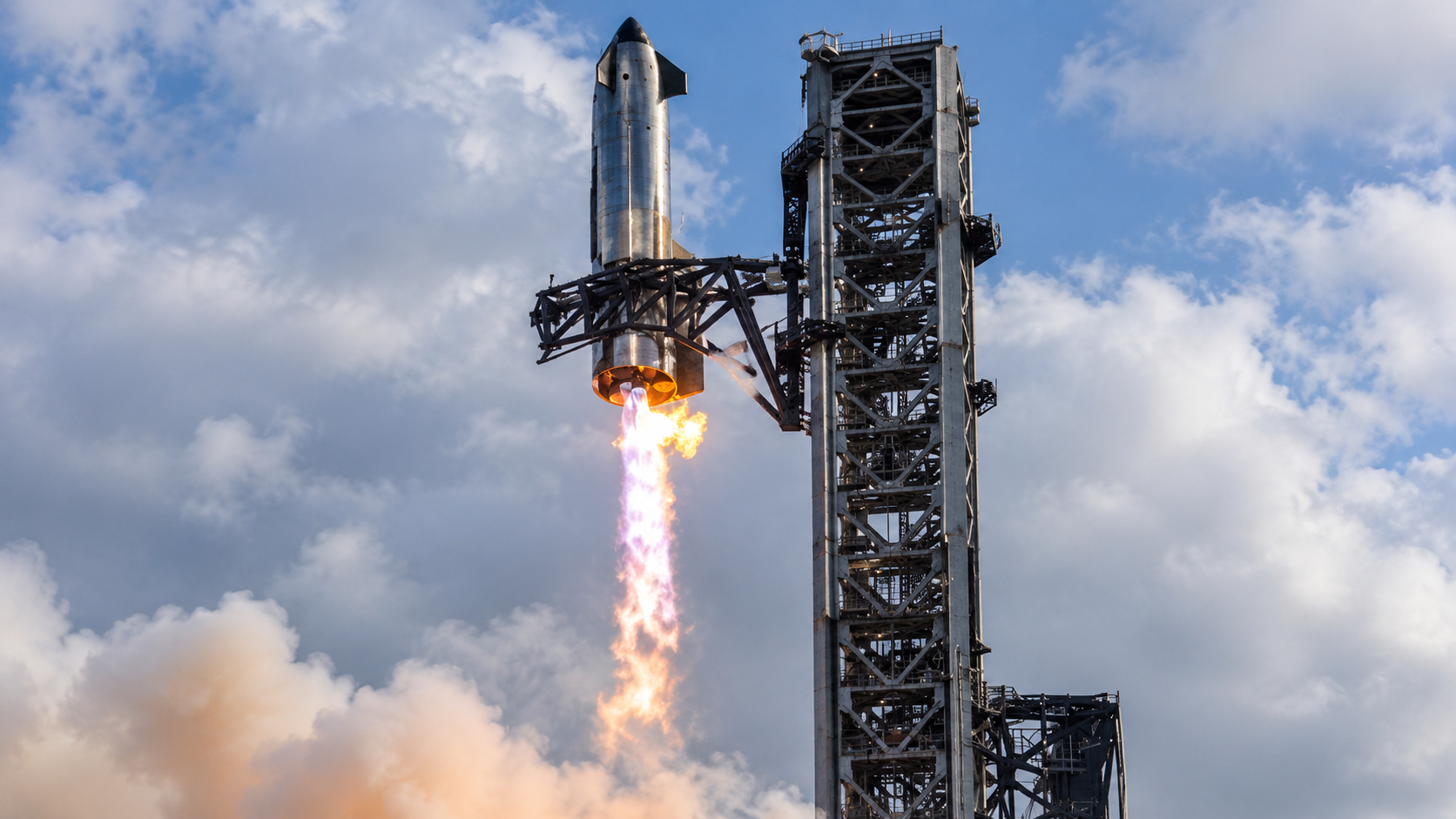
SpaceX caught Starship’s upper stage with its Texas launch tower on Nov. 14 after a 22.5-hour orbital flight, a first for any Starship ship. The Super Heavy booster missed its own catch and crashed into the Gulf of Mexico.

Author’s Review
Half a success is still a big deal here. Catching the ship is the harder trick, and SpaceX pulled it off on its first try. The booster miss is a reminder that this is still a test program, not an airline. I’d treat “everything changes” as ambition, not a done deal, because nobody has reflown a caught ship yet. For U.S. readers, the real stakes are Starlink and NASA’s Moon plans, which both lean on this rocket working reliably.
What Happened on Flight 15
Starship lifted off from Starbase, Texas, on Nov. 13 at 5:47 p.m. ET. Flight 15 was its second trip to orbit. The upper stage, Ship 42, deployed 26 Starlink V3 satellites and circled Earth 14 times. It then returned to the tower and settled into the “chopstick” arms at about 4:20 p.m. ET on Nov. 14, roughly 22.5 hours after launch, according to Space.com’s coverage. You can watch the catch in this replay from the VideoFromSpace channel.
Why the Booster Missed
The first half of the plan failed. Super Heavy Booster 22 was supposed to return for a tower catch about 6.5 minutes after liftoff. It diverted to the Gulf and exploded before reaching the water, CNBC reported. SpaceX said early indications point to a low-fuel alarm that ended the return burn early. Guidance then saw the booster was off position and aborted the catch automatically. The root cause is still under investigation. SpaceX has caught Super Heavy three times before, so this is a setback rather than a new problem.
Why Catching the Ship Matters
Reuse Is the Goal
A catch lets SpaceX skip ocean recovery and move toward fast inspection, refurbishment and reflight. SpaceX says double catches will be standard on operational missions. The ship is the tougher target because it flies higher and faster than the booster.
Starlink and the Business Case
The satellites on board were next-generation Starlink V3 units. Elon Musk told investors last month that success on this flight was “more likely than not.” For the money side of that story, see our report on SpaceX’s Q3 earnings and Starlink growth.
What Still Has to Happen
Rapid reuse is still unproven. SpaceX has reflown Super Heavy boosters only twice, with months between flights, and has never reused a ship. Deep-space missions also need in-orbit refueling, which Ship has not demonstrated yet.
NASA chose Ship as its first crewed lunar lander. Current plans call for a landing on Artemis IV, targeted for 2028. SpaceX is still building the crew cabin and life-support system, and no Starship has flown with one. Musk’s goal of 10,000 launches a year by 2030 is a target, not a schedule.
Frequently Asked Questions
Was anyone on board Starship?
No. Starship has not flown with a crew cabin yet. Flight 15 carried 26 Starlink satellites instead.
Did the double catch work?
Only half of it. The ship was caught on Nov. 14, but the booster diverted to a Gulf splashdown on Nov. 13.
What does this mean for NASA’s Moon plans?
It removes one risk, but not the big ones. SpaceX still needs a crew cabin and orbital refueling before an Artemis landing.
Conclusion
\nFlight 15 proved a catch from orbit is possible, which matters for reuse and launch costs. It also showed the booster return still needs work. Starship now joins the wider set of technologies driving the future. The next flights will show whether this is a milestone or a routine.
Alex Vance
Senior Tech Analyst & Systems Architect
Alex Vance is a Systems Architect and Senior Tech Analyst with over 8 years of experience evaluating cloud infrastructure, AI integration, and enterprise software models. He focuses on practical, scalable technology deployment for modern businesses.