Microsoft Restores Outlook and Teams After 24 Hour Global Outage
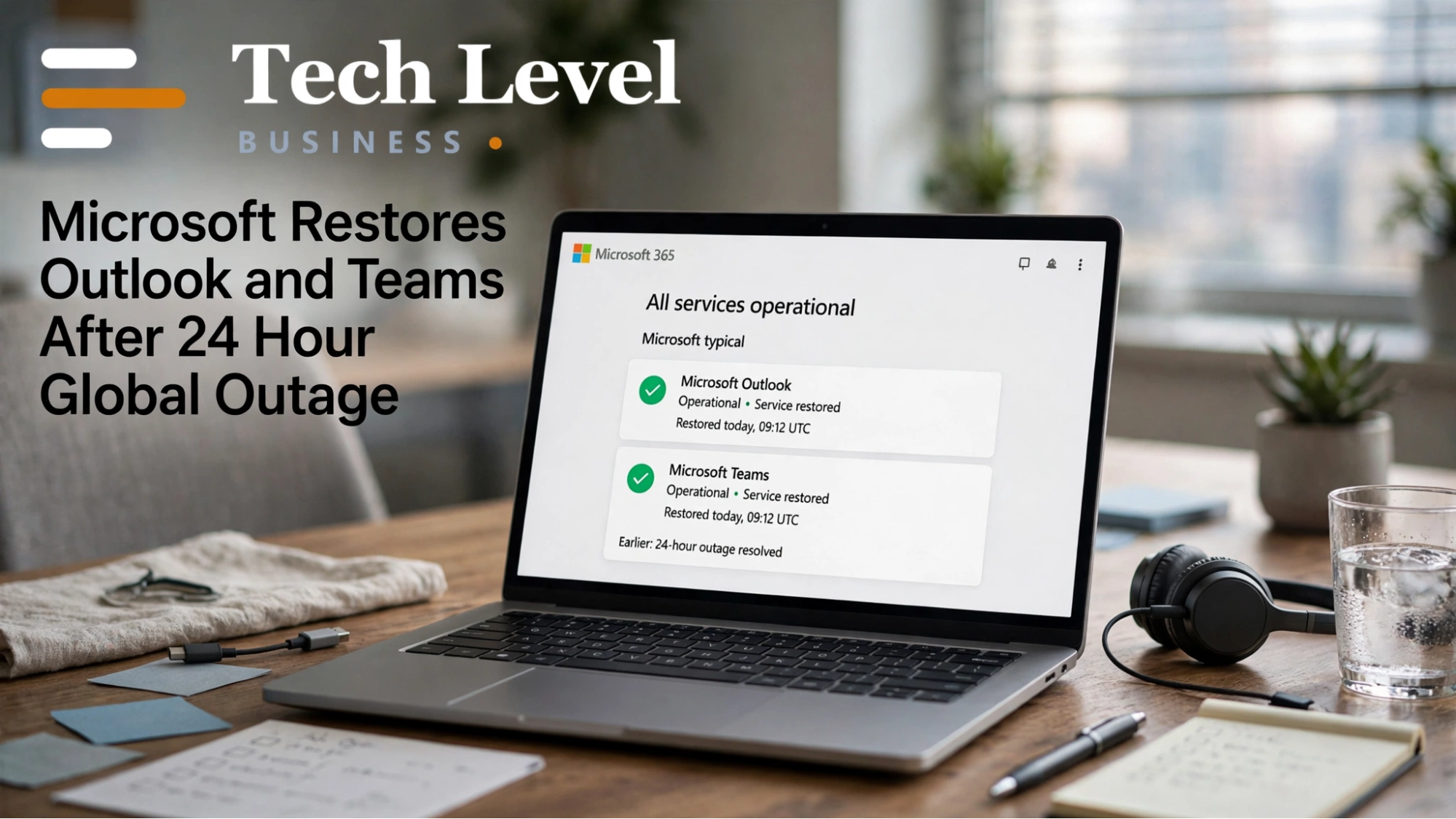
Microsoft said Saturday that Outlook, Teams, Copilot and its other services have fully recovered after a global outage that lasted more than 24 hours. The company blames a technical fault, not a cyberattack.

Author’s Review
A day without email is not a small thing. For many American offices, Outlook is where invoices, approvals and customer replies live, so when it stalls, work stalls with it. What stands out to me is how long recovery took and how many organizations, from trading firms to police, had to improvise. Microsoft’s apology was fair, but the promised post-incident report is the real test.
What Happened
Trouble began Thursday, November 12. Users could not send email, manage calendars or host virtual meetings, Reuters reported. Microsoft said the problem hit features tied to Exchange Online, its cloud email and scheduling hub, and also affected its Copilot AI assistant. Downdetector, owned by Ookla, logged more than 7.4 million reports worldwide, peaking near 20,000 a minute. On Saturday, Microsoft posted on X that it had finished addressing the underlying issue and restored service to the remaining customers and regions.
What Caused the Outage
Microsoft calls it “a technical issue not related to cyber or AI / agents.” It says a problem introduced during an earlier network capacity upgrade surfaced after a recent network change. Earlier, the company said a process that sets up secure connections became overwhelmed, causing servers to stop handling requests. Because demand was heavy, Microsoft restored service gradually and checked stability at each stage, which slowed recovery. A full post-incident report is promised.
Who Was Affected
In the United States
U.S. government agencies were among those hit. Electric truck maker Workhorse Group rescheduled its results to Nov. 16, and OpenAI and Anthropic faced issues with Microsoft connectors that were later resolved.
Around the World
Agencies in Australia and Japan were affected. In Britain, the NHS turned to backup measures, and London’s Metropolitan Police struggled to take some crime reports online, though its response to calls continued. Euronext reported email disruptions, and a Taiwanese financial company reportedly used fax to confirm trades. Organizations running Microsoft software on their own servers were somewhat spared.
The Cost and the Bigger Question
Morningstar DBRS estimates global insured losses at $300 million to $500 million, below the $400 million to $1.5 billion toll of the 2024 CrowdStrike outage. Reuters described this as one of Microsoft’s longest outages and its second service disruption this year. Analysts say repeat incidents could push IT teams to rethink relying on one provider, though high switching costs may keep most customers in place.
How U.S. Businesses Can Prepare
You cannot prevent a provider outage, but you can soften the blow:
- Set up a backup channel. Keep a second messaging tool or phone tree for key staff and customers. Distributed teams need this most; see our guide to managing a remote team across time zones.
- Know what lives where. Review which files sit in the cloud and which sit locally, starting with our take on cloud backups over local storage.
- Watch the right page. Bookmark Microsoft’s service status page and decide who checks it first.
- Prepare a customer notice. A ready-made delay message saves time when email is down.
For a quick recap, this video report on Microsoft’s apology covers the nearly 24-hour disruption.
Frequently Asked Questions
Are Outlook and Teams working again?
Microsoft says service is restored for all remaining customers and regions. If problems persist, contact your IT administrator.
Was the outage a cyberattack?
Microsoft says no. It cited a technical fault and said it knew of no malicious activity. Australia’s cyber security minister said Microsoft does not suspect an attack.
Which services were affected?
Microsoft listed Exchange Online, Teams, SharePoint Online, Copilot, Defender XDR, Planner, To Do, Intune and Defender for Office 365.
Conclusion
\nRecovery is good news, but the episode shows how much daily work depends on a few providers. Until Microsoft’s report arrives, the exact trigger remains unclear. Treat this week as a prompt to build a backup plan.
Alex Vance
Senior Tech Analyst & Systems Architect
Alex Vance is a Systems Architect and Senior Tech Analyst with over 8 years of experience evaluating cloud infrastructure, AI integration, and enterprise software models. He focuses on practical, scalable technology deployment for modern businesses.