Why White-Collar Workers Are Quitting Over AI Fears Before Layoffs Arrive
Some white-collar professionals are leaving careers over fears of AI disruption, even though data shows no mass AI-driven layoffs so far. The Guardian reports that worker psychology has already shifted.

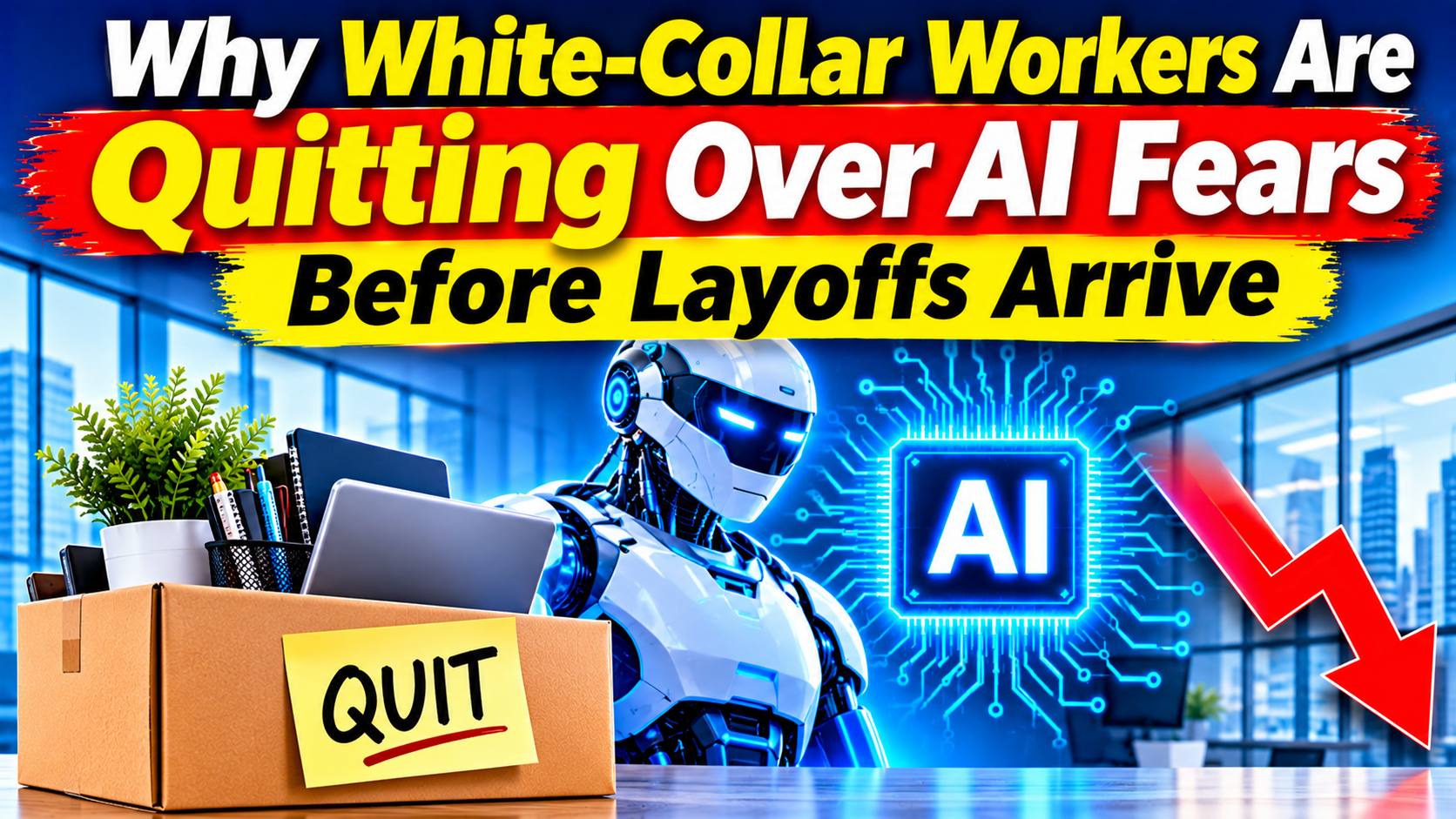
The Guardian reported on November 6 that white-collar professionals are leaving jobs ahead of predicted AI disruption. Examples include a former software engineer who became a police officer, an ex-advertising producer now working as an actor and barista, and a former PR consultant studying comparative literature.
The trend gained attention after AI researcher Mrinank Sharma left Anthropic this year. His resignation letter on X was viewed 15.3 million times, and he warned of a world “in peril.” He is now pursuing a poetry degree. Other workers cite concerns about AI harming thinking skills, climate impact, customer value and security.
What the Data Actually Shows
No Mass Layoffs Yet
The Economist estimates AI has created about one million U.S. jobs, compared with roughly 200,000 layoffs attributed to AI since mid-2023. The figures are estimates built differently, so they are not an exact comparison, but they point to no collapse so far.
Americans Remain Worried
A Pew Research Center survey of 3,488 U.S. adults, conducted June 22–28, 2026, found 71% expect AI to mean fewer jobs over the next 20 years, up from 64% in 2024. Only 5% expect more jobs. The 20-year window matters: it measures long-term expectations, not current job losses.
Some Workers Are Weighing Exits
An Adaptavist survey of 2,500 knowledge workers across the U.S., U.K., Canada, Germany and Spain found 33% are considering leaving their industry over AI fears, while 74% are learning new skills. It is a multi-country survey, not U.S.-only.
Where the Fear Comes From
Industry warnings add to the anxiety. In a 2025 Axios interview, discussed in this Breaking Points video, Anthropic CEO Dario Amodei warned AI could eliminate half of entry-level white-collar jobs and lift unemployment to 10–20% within one to five years. That is a forecast, not a recorded outcome, and the video dates from May 2025.
Practical Advice for Workers
Build a Safety Net First
Before leaving a stable job, review your savings and expenses. Our piece on preparing your finances for a career pivot is a good place to start.
Use AI Instead of Fearing It
Learning the tools in your current role can protect your value. Our look at the role of AI tools in daily business operations offers useful context.
Strengthen Human Skills
Judgment, client trust and deep domain knowledge remain valued by many employers. Document your results so you can move into adjacent roles if needed.
What Employers Can Do
Be open about AI plans and offer training. Adaptavist’s report suggests unclear rollouts can undermine workers’ confidence in hard-earned skills.
Frequently Asked Questions
Is AI causing mass layoffs in the U.S.?
The Guardian says there is no evidence linking AI to mass layoffs. The Economist estimates about 200,000 AI-attributed layoffs since mid-2023.
How many Americans think AI will reduce jobs?
Pew’s June 2026 survey found 71% expect fewer jobs over the next 20 years.
Should I quit because of AI fears?
Not without a plan. Check your finances, build skills and explore options while employed.
AI fear is reshaping career decisions faster than AI is reshaping payrolls. One estimate shows job creation outpacing AI-attributed layoffs, yet many Americans expect a smaller job market ahead. For workers, the smartest move is preparation, not panic.
Elena Rostova
B2B Operations Consultant & Business Editor
Elena Rostova is a B2B strategy consultant specializing in digital operations, regulatory risk management, and scaling business models. She writes on corporate licensing, operational frameworks, and enterprise growth.