Global Markets Fall as Trump Plans New Section 301 Tariffs on 14 Major Trading Partners
Global stock markets tumbled on Wednesday, November 25, 2026, after the Trump administration proposed new Section 301 tariffs on 14 major trading partners, including China, the European Union, Japan, and India. The announcement rattled Wall Street ahead of Thanksgiving, sending the Nasdaq Composite down more than 3% in intraday trading as U.S. investors weighed fresh supply chain costs and sticky inflation.

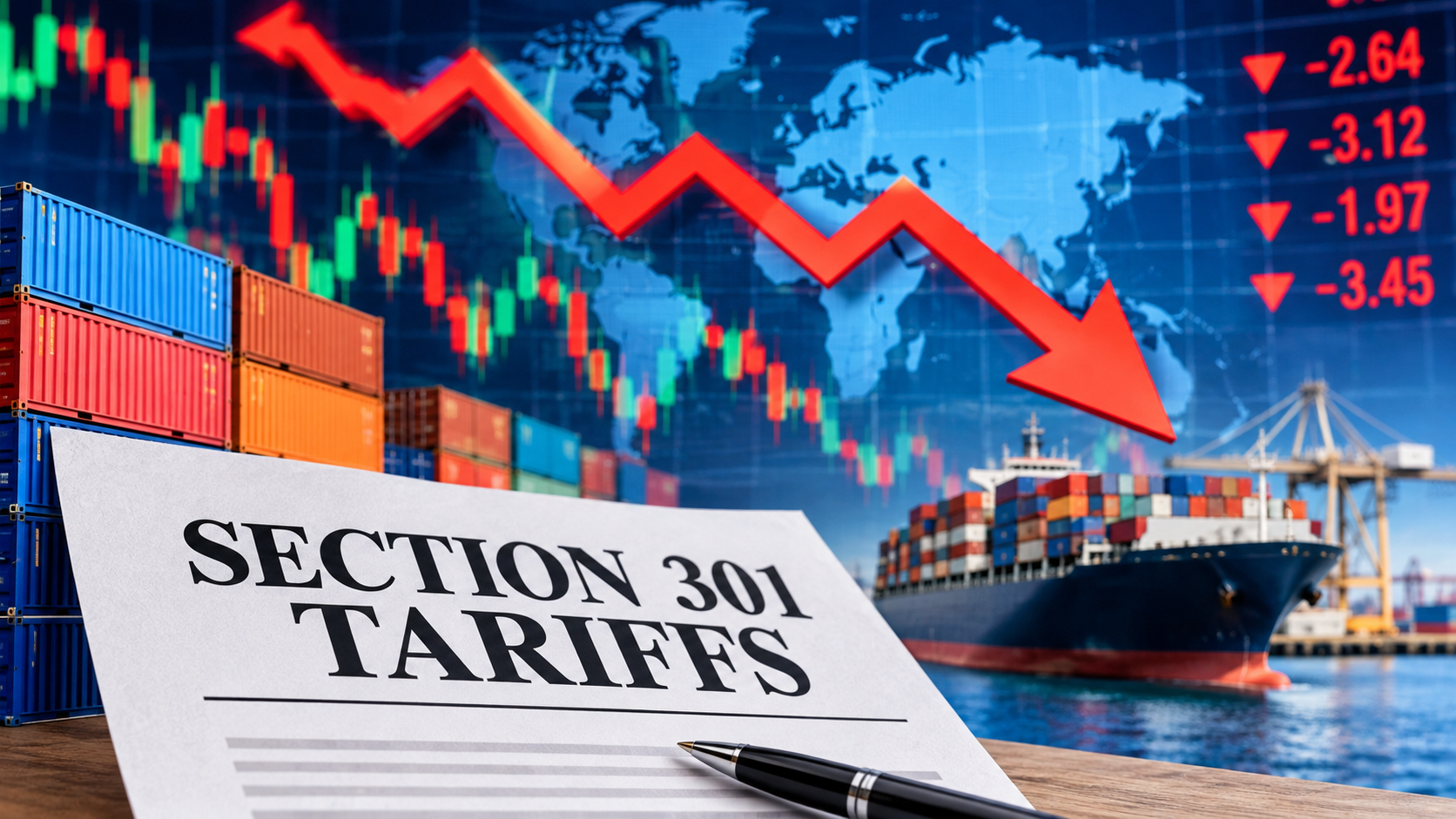
This AI-generated image is an editorial illustration provided for informational purposes only. It does not represent an actual photograph or specific market event.
Author’s Review
Having tracked U.S. trade policy and market reactions throughout 2026, it is clear that Wall Street was caught off guard by how quickly the White House pivoted after February’s Supreme Court ruling. While Washington frames these duties as a shield against foreign factory overcapacity, U.S. businesses and everyday consumers ultimately absorb much of the tariff bill through higher import prices. For American investors, the smartest move right now is avoiding panic-selling during holiday-thinned trading and watching how companies adjust their 2027 supply chains.
Why Global Markets Tumbled Today
Equity markets across the United States, Europe, and Asia retreated sharply on Wednesday as renewed trade friction collided with an ongoing pullback in artificial intelligence stocks. According to official findings from the Office of the United States Trade Representative (USTR), U.S. Trade Representative Jamieson Greer determined that industrial policies in 14 economies create structural excess capacity that burdens American commerce.
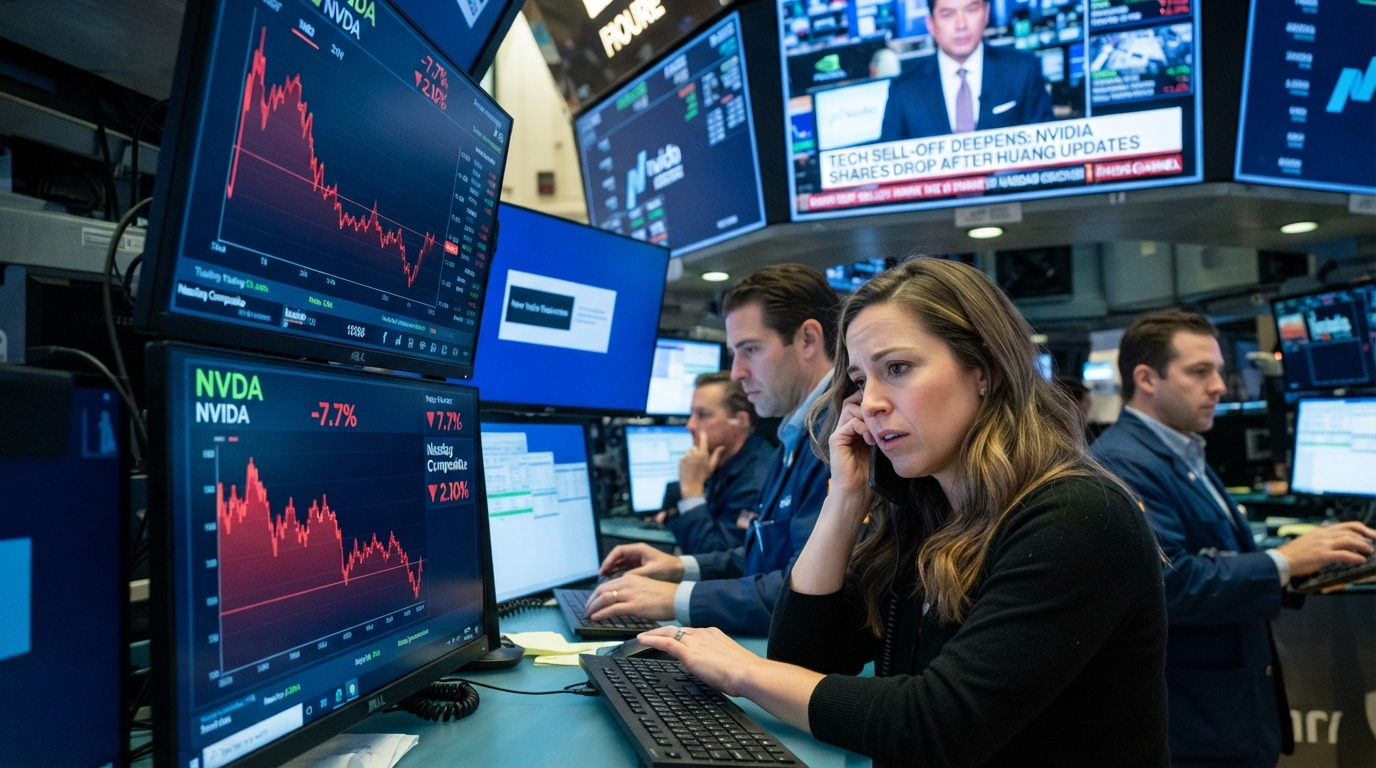
Wall Street reacted immediately to the prospect of steeper import costs. During intraday trading, the tech-heavy Nasdaq Composite fell more than 3%, the S&P 500 dropped 2.7%, and the Dow Jones Industrial Average lost 1.7% before paring some losses later in the session. As highlighted in Bloomberg Television’s November 25 market briefing, investors shifted rapidly out of high-growth technology names—pushing Nvidia shares down sharply—and moved capital into defensive consumer staples and U.S. Treasury bonds. This volatility mirrors recent market anxiety over AI recession risks and massive U.S. tech capital spending.
Inside the New Section 301 Tariff Plan
Targeted Countries and Proposed Rates
The proposed duties follow eight-month investigations launched across 16 economies in March 2026 under Section 301 of the Trade Act of 1974. This legal route serves as the administration’s workaround after the Supreme Court invalidated earlier emergency tariffs in February 2026. Per reporting from PBS NewsHour, the USTR issued determinations and proposed tariffs for 14 trading partners—China, the European Union, Japan, South Korea, Taiwan, India, Vietnam, Thailand, Malaysia, Indonesia, Singapore, Cambodia, Bangladesh, and Switzerland—while holding off on immediate determinations for Mexico and Norway, which remain under review.
Under the proposal, Chinese goods face an added 20% tariff—bringing total duties on certain items up to 45%—while European Union imports face a 15% levy and Vietnamese goods face up to 20%. Washington also announced separate import tax hikes on Brazilian sugar and a 10% duty on aircraft.
U.S. officials also noted that—outside of China—these new Section 301 duties will not stack on top of existing forced-labor or sector-specific auto and steel tariffs; instead, importers will pay whichever rate is higher, resulting in an average effective increase of roughly 5 percentage points.
Timeline Before Implementation
These tariffs do not take effect overnight. The USTR will collect public comments through January 5, 2027, and hold public hearings starting January 25, 2027. That timeline gives American importers a short window to adjust inventory, negotiate with suppliers, and voice concerns before final duties are enforced.
What U.S. Investors and Businesses Should Do Next
For U.S. retail investors and business owners, tariffs create two immediate pressures: tighter corporate profit margins and higher inflation. With consumer inflation already running above the Federal Reserve’s 2% target, new import taxes could keep interest rates higher for longer.
- Watch Treasury Yields and Rate Risks: Sticky tariff-driven inflation can push bond yields higher and weigh on stock valuations, much like Chamath Palihapitiya’s warning on U.S. debt risks and Treasury yields.
- Favor Pricing Power: In inflationary trade environments, U.S. companies with strong domestic demand and pricing power typically outperform import-heavy retailers.
- Avoid Emotional Trading: Holiday market volume is thin, which exaggerates daily swings. Long-term 401(k) investors benefit most from staying diversified rather than reacting to headlines.
Conclusion
Wednesday’s global selloff shows how sensitive financial markets remain to trade policy shifts, especially when tech valuations are already under pressure. Because the USTR’s Section 301 tariffs face a formal review period through January 2027, U.S. businesses and investors have valuable time to prepare before any new duties hit balance sheets.
Elena Rostova
B2B Operations Consultant & Business Editor
Elena Rostova is a B2B strategy consultant specializing in digital operations, regulatory risk management, and scaling business models. She writes on corporate licensing, operational frameworks, and enterprise growth.
Follow Tech Level Business on Google
Add us as a preferred source to find more of our journalism in Google Search.